Easter Island, a Chilean territory, is a remote volcanic island in Polynesia. Its native name is Rapa Nui. It’s famed for archaeological sites, including nearly 900 monumental statues called moai, created by inhabitants during the 13th–16th centuries.
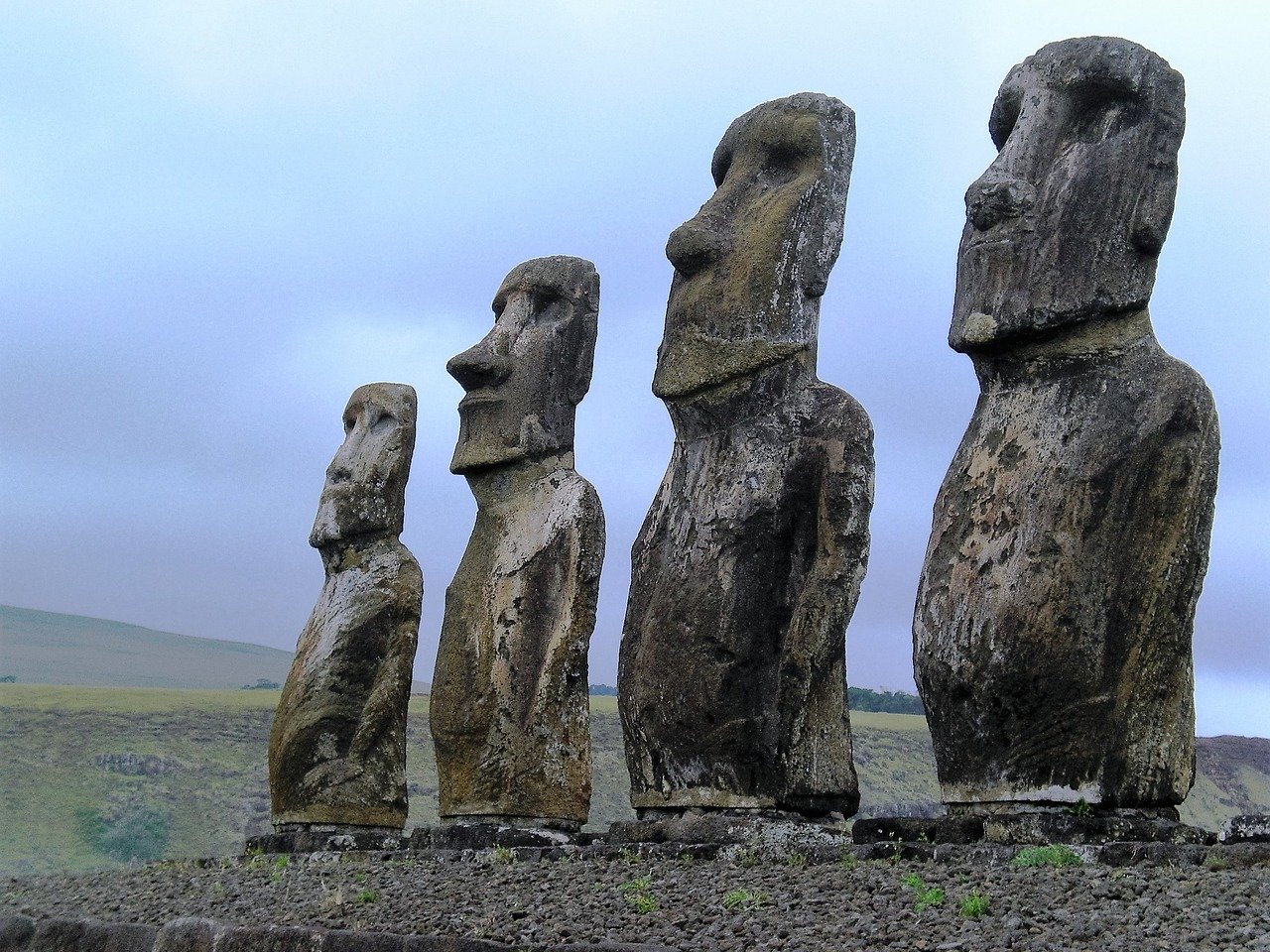
The moai are carved human figures with oversize heads, often resting on massive stone pedestals called ahus. Ahu Tongariki has the largest group of upright moai.
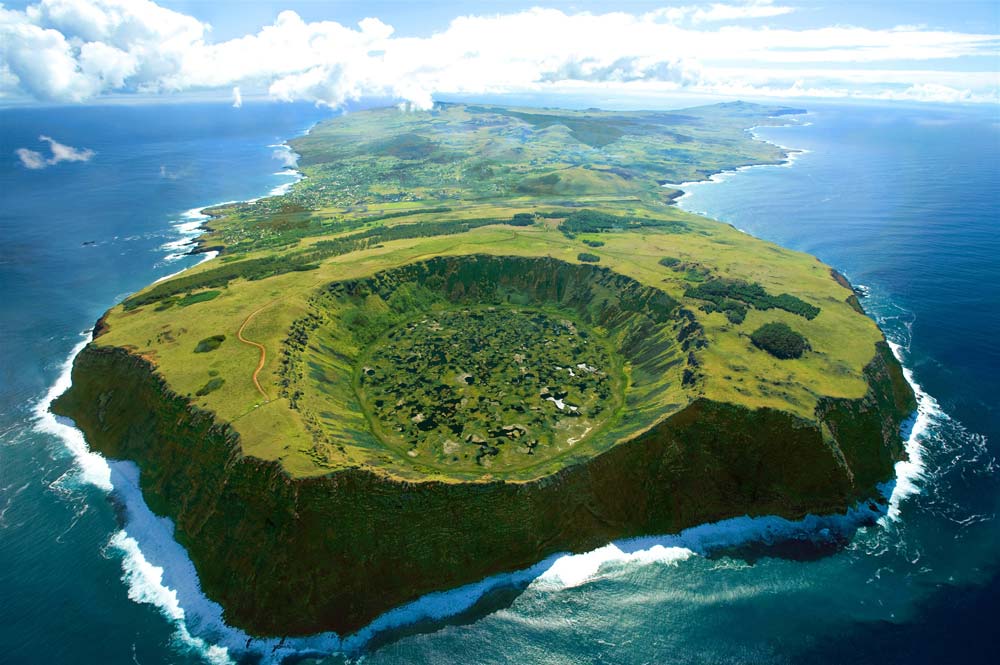
The name Easter Island was given by Jacob Roggeveen, the first recorded European visitor to the island on 5 April 1722, which so happened to be Easter Sunday.
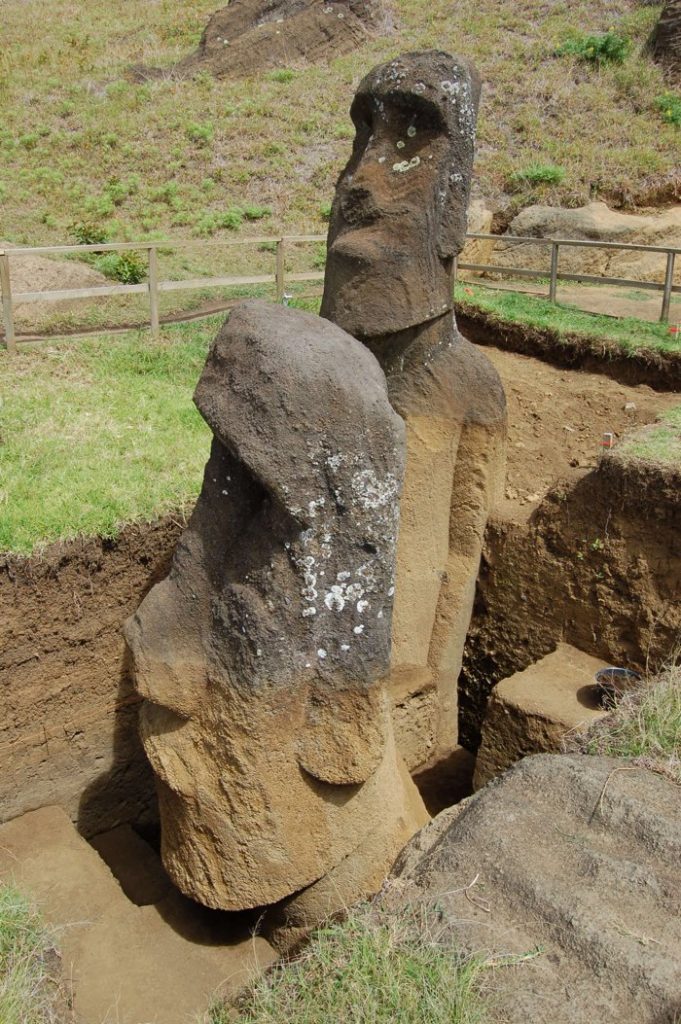
There are nearly 900 Moai on Easter Island, in various stages of construction. The average size of a Moai statue is 13 feet tall and 14 tons.
Built to honour a chieftain or important people the natives believed the spirit of the person would forever watch over the tribe and bring good fortune. This is why the statues are called Moai: the word comes from Rapa Nui (the Polynesian language of Easter Island) and means “so that he can exist”.
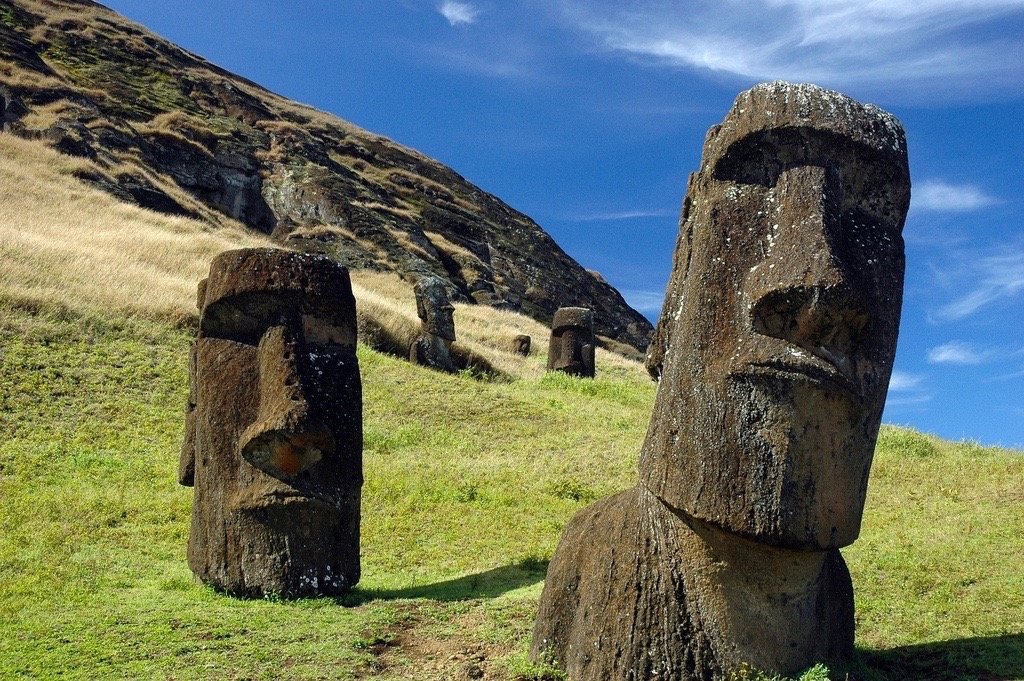
None of the Moai statues were standing when scientists first arrived, those upright today have been re-erected.
Although commonly known as the ‘Easter Island heads’ this is a misconception as it was discovered in 2012 that all of the heads have full bodies which have become submerged.